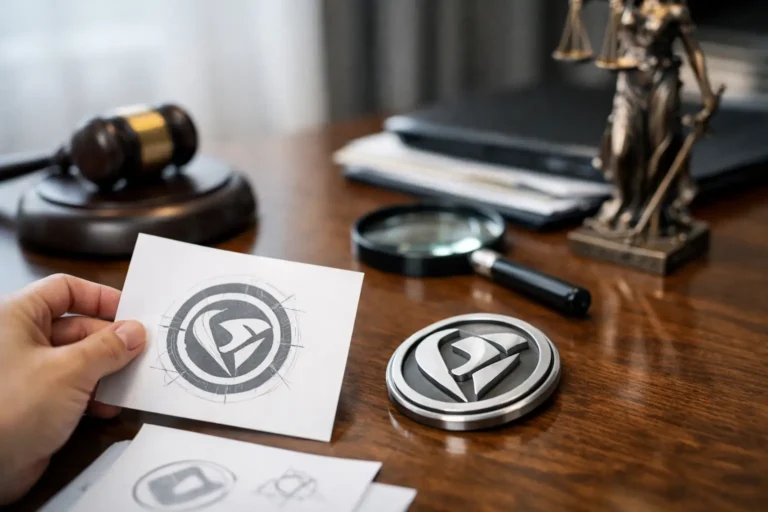

A founder spends weeks getting a logo just right, then hits a practical question fast: can I trademark my logo? If the mark will appear on your website, packaging, ads, signage, or social profiles, this is not a small detail. It affects how well you can protect your brand as you grow.
The short answer is yes, you often can trademark your logo, but only if it meets certain legal standards and is actually used in connection with your business. A logo is not automatically eligible just because you paid for it, and owning the design files is not the same as owning trademark rights. That distinction matters more than most small businesses realize.
Can I trademark my logo if I own the design?
Usually, yes, but design ownership and trademark rights are two different things.
Copyright covers the creative artwork itself. Trademark protects the logo as a brand identifier – the visual symbol customers associate with your goods or services. If a designer creates your logo and transfers full copyright ownership to you, that gives you control over the artwork. It does not automatically guarantee federal trademark registration.
For trademark purposes, the key issue is whether the logo functions as a source identifier in the marketplace. In plain English, it needs to tell customers that a product or service comes from your business and not someone else. That is why a nice-looking logo alone is not enough. It has to be distinctive and used in commerce.
This is also why professional design process matters. If your logo is built from generic icons, overused clip art, or recycled elements, it may be harder to protect. A custom logo gives you a stronger foundation, both from a branding standpoint and from a legal risk standpoint.
What makes a logo eligible for trademark protection?
The USPTO does not approve marks just because a business likes them. Your logo has to clear several hurdles.
First, it needs to be distinctive. A highly original logo usually has a better shot than one that simply describes what you do. A plain drawing of a coffee cup for a coffee shop, for example, may be harder to register than a more unique visual identity.
Second, it cannot be confusingly similar to an existing trademark in a related industry. This is where many businesses run into trouble. Even if another logo does not look identical, the USPTO can still refuse registration if consumers might reasonably believe the brands are connected.
Third, you need to use the logo in commerce, or have a legitimate intent to use it soon. If you are already selling services under the logo, that helps. If you are still pre-launch, you may be able to file based on intent to use, but the registration process works a little differently.
There is also a practical layer here. A logo can be legally registrable and still not be your strongest trademark asset. In some cases, your business name or wordmark offers broader protection than a graphic logo because it covers the words regardless of styling. For many small businesses, the smartest move is not always either-or. It may be protecting both over time.
Common reasons logo trademark applications get rejected
A lot of business owners assume the filing itself is the hard part. Often, the harder part is the groundwork before the filing.
One common issue is conflict with an existing mark. If someone else is already using a similar logo for similar products or services, your application can be refused. Another issue is lack of distinctiveness. Logos that are too generic, ornamental, or merely descriptive may not qualify.
Applications also get delayed or denied because of technical mistakes. The wrong business owner name, the wrong classification of goods or services, or poor examples of how the logo is used can all create problems. If your logo changes after filing, that can trigger issues too. Trademark protection is tied to the specific mark you submit, not a rough idea of it.
This is one reason growing brands benefit from getting the identity right before they invest in legal protection. If your visual brand is still shifting every few months, it may be worth tightening that up first.
Do I have any rights before federal registration?
Yes. In the United States, you can gain what are called common law trademark rights by using your logo in business, even if you never file a federal application.
But those rights are limited. They usually apply only in the geographic areas where you are actively doing business and building market recognition. That can be enough for a very local company in the early stages, but it becomes less reliable as you expand.
Federal registration gives you stronger advantages. It creates a public record of your claim, can help deter copycats, and generally makes enforcement easier. It can also put you in a better position if you need to challenge an infringing brand name or logo later.
For a small business trying to grow beyond one city or region, that added protection is often worth serious consideration.
Can I trademark my logo before I launch?
Yes, potentially. If you have not started selling yet, you may be able to file an intent-to-use application.
This allows you to reserve your place in line before full commercial use begins. It can be helpful for startups that have finalized branding, secured a domain, and are preparing to launch but are not yet generating revenue.
That said, an intent-to-use filing is not the same as an immediate registration. You will still need to show actual use in commerce before the mark can fully register. If your launch timing is uncertain, that can affect strategy.
For early-stage businesses, this is where good coordination matters. The best time to think about trademark readiness is often before your logo appears everywhere, not after you have printed signs, business cards, packaging, and social graphics.
Should you trademark just the logo, or the name too?
If budget is a concern, this is a fair question.
In many cases, the business name is the stronger place to start because it protects the wording itself across different fonts and visual treatments. A logo registration, by contrast, protects that specific graphic presentation. If you redesign later, your old logo registration may no longer cover the updated version.
Still, logo protection can be valuable. Some brands rely heavily on a visual symbol. Others use a logo badge, icon, or emblem that becomes recognizable on its own. If your visual identity plays a major role in how customers identify you, trademarking the logo may make sense as part of a broader brand protection plan.
The right approach depends on how you use your brand, whether your identity is stable, and how much legal coverage you want now versus later.
What to do before filing for a trademark
Before you spend money on an application, make sure your logo is ready.
Start with clearance. You want to know whether similar marks already exist in your category. A basic online search is not enough by itself. Trademark conflicts can come from registered marks, pending applications, and businesses already using similar branding in the market.
Next, confirm ownership. If a freelancer, agency, or design platform created the logo, you should have clear written rights transferring the final design to your business. That should not be vague. Your designs. Your rights. 100% yours is the standard you want.
Then review the logo itself. Is it distinctive, professionally built, and consistent across your brand materials? Is it likely to stay in place for the next few years? If the answer is no, filing now may be premature.
For many businesses, this is where working with an experienced design partner helps. A custom identity created with originality, consistency, and long-term use in mind gives you a better starting point than a quick, low-cost logo assembled from common parts.
The practical takeaway for small businesses
If you are asking can I trademark my logo, the better question may be whether your logo is strong enough, distinctive enough, and settled enough to protect.
A trademark is not just paperwork. It is part of how you build a brand that customers can recognize and trust. The more serious you are about growth, the more important it becomes to treat your logo as a business asset, not just a design file.
If your current logo feels generic, inconsistent, or unclear on ownership, fix that first. If it is custom, distinctive, and already tied to your products or services, trademark protection may be the next smart step. A strong brand is easier to defend when it was built with ownership and longevity in mind from day one.