
A small business logo usually gets judged before your team, your pricing, or your customer service ever does. It shows up on your website, social profiles, invoices, packaging, signs, and sales materials. That is why logo design for small business is not just about making something look nice. It is about helping people decide, quickly, that your business is credible.
For many owners, the hard part is not knowing they need a logo. The hard part is knowing what kind of logo will actually support growth. There is a big difference between a mark that looks acceptable in a social media profile and one that can carry your brand across every customer touchpoint. If you are building a new business or reworking an outdated identity, the goal is not to chase trends. The goal is to create a logo that works in the real world.
Why logo design for small business matters more than most owners expect
Customers make fast assumptions. A polished logo signals that your business is established, organized, and worth taking seriously. A weak logo does the opposite, even if your service is excellent. That is the uncomfortable truth behind branding for small companies. People often experience your visuals before they experience your value.
This matters even more for businesses competing against larger, better-known brands. A professional logo helps close the credibility gap. It can make a newer company feel more established and help a local business look every bit as trustworthy as a national competitor.
It also creates consistency. Small businesses often grow in stages, adding a website, business cards, brochures, social graphics, vehicle wraps, uniforms, packaging, or signage over time. If the logo is poorly built from the start, everything that follows gets harder. Colors shift, files do not work, layouts feel off, and the brand starts to look fragmented.
What a good small business logo actually does
A strong logo is clear before it is clever. It should be easy to recognize, easy to read when text is involved, and flexible enough to work in different sizes and formats. If it only looks good in one perfect digital mockup, it is not doing its job.
Good logo design also reflects brand positioning. A law firm, coffee shop, roofing company, and software startup should not all look like they came from the same template library. Your logo should match the expectations of your market while still helping you stand apart. That balance matters. If you go too generic, you disappear. If you go too unusual for your industry, customers may not understand what kind of business you are.
The best logos also age well. Trend-heavy design can look current for a few months and dated not long after. Small businesses usually do not want to rebrand every year. A more durable direction often gives better long-term value.
Common mistakes in logo design for small business
The most common mistake is treating the logo like a personal preference project instead of a business asset. Owners sometimes focus on favorite colors, symbols, or styles without asking whether those choices will resonate with customers. Your logo is not meant to impress you alone. It needs to communicate with the people you want to serve.
Another frequent issue is overcomplication. Too many fonts, too many shapes, unnecessary effects, and fine details may look interesting up close, but they fall apart when scaled down. Think about how often your logo will appear in small spaces, from social media icons to mobile screens.
Cheap shortcuts can create bigger costs later. Contest platforms and bargain design marketplaces may look appealing at first, but quality is inconsistent, the process is often impersonal, and the final files may not support real business use. In some cases, owners do not even get a strategic explanation behind the design, just a batch of random concepts with little accountability.
Then there is the copyright issue. If ownership is unclear, or if your logo is built using questionable stock elements, you can end up with a brand asset you do not fully control. That is not a small problem.
How to judge whether your current logo is helping or hurting
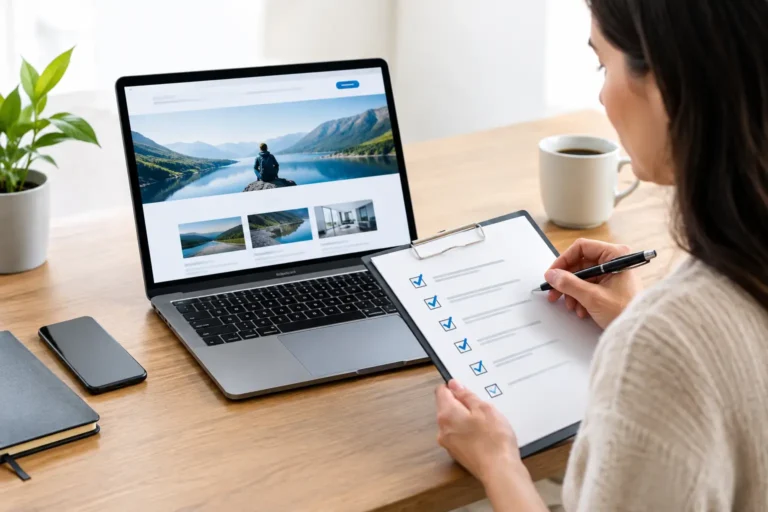
Start with a practical question: does your logo look credible everywhere your business appears? Not just on your homepage banner, but on receipts, storefront signs, email signatures, social media, printed materials, and presentation decks.
If your logo feels outdated, hard to read, inconsistent across platforms, or disconnected from the quality of your service, it may be holding you back. The same is true if your business has evolved. Many companies outgrow their original logo because they started quickly, changed direction, or expanded into a larger market.
You should also consider whether the logo matches your current customer. A logo that felt right when you were serving a local niche may not support you if you are now targeting higher-value clients, broader regions, or more competitive sectors.
A redesign is not always necessary. Sometimes a careful refinement is enough. Other times, the smartest move is a full reset. It depends on how much equity the current logo still holds and how far it is from where your brand needs to go.
What to expect from a professional logo process
Professional logo design should feel guided, not confusing. You should not be left guessing what happens next or whether the designer understands your business. A solid process begins with discovery. That means clarifying what you offer, who you serve, how you want to be perceived, and where the logo will be used.
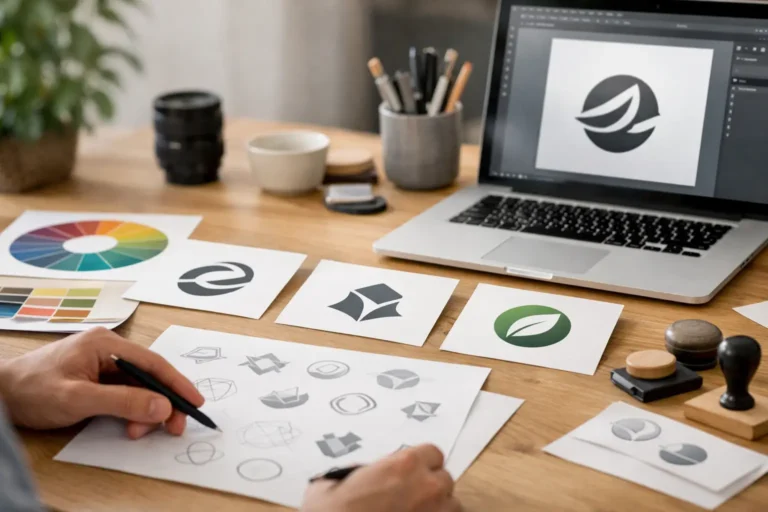
From there, concept development should be intentional. Good designers are not just decorating your business name. They are translating brand position into a visual system. That includes font direction, color strategy, iconography when appropriate, and practical considerations like scalability and file usage.
Feedback matters, but structure matters too. Too many revision rounds without clear strategy can send a project in circles. The best results usually come from collaboration with direction. You want room for input, but you also want an experienced partner who can explain what works, what does not, and why.
That is one reason many small businesses prefer a managed service over a random marketplace. With a guided process, transparent pricing, and a real project manager, the experience tends to be more reliable. For owners who do not have time to chase freelancers or sort through speculative submissions, that support can be just as valuable as the design itself.
Choosing the right logo design partner
Price matters, but value matters more. The cheapest option is rarely the least expensive in the long run if you end up redesigning everything six months later. On the other hand, many small businesses do not need or want the overhead of a traditional agency.
The right fit is usually a partner that offers custom work, clear deliverables, responsive communication, and full ownership of the final files at a predictable price. You should know who is managing your project, what is included, how revisions work, and what file formats you will receive.
Ask practical questions. Have they worked with businesses at your stage? Do they build logos for real-world use or just presentation mockups? Will they give you files ready for print and digital? Can they support the rest of your brand if you need business cards, social assets, or a website next?
For many growing companies, that middle ground is ideal: professional quality without agency complexity. That is where a company like Logoworks can make sense – especially for owners who want custom design, human guidance, and a process built around small business realities.
A logo is the start of the brand, not the whole brand
A strong logo does a lot, but it cannot carry your business alone. It works best as part of a larger identity that includes consistent colors, typography, supporting graphics, and branded materials. That is how a business starts to look established across every touchpoint.
Still, the logo is where that system usually begins. It sets the tone. It gives your business a recognizable face and creates the foundation for everything that follows. When done well, it helps your company look more trustworthy, more consistent, and more prepared to grow.
If you are investing in logo design for small business, make the decision based on where your company is headed, not just what feels easiest right now. The right logo should serve you on day one, but it should also still make sense when your business looks a lot bigger than it does today.