
If you are choosing between a custom logo vs logo maker, you are probably not just picking a graphic. You are deciding how you want your business to show up when someone sees your website, business card, social profile, packaging, or proposal for the first time. That choice matters more than most business owners expect, especially when you are trying to look credible from day one.
For some businesses, a logo maker is enough to get started. For others, it creates problems that show up later – generic branding, weak file quality, limited ownership, or a mark that simply does not reflect the business behind it. The right answer depends on your goals, your timeline, and how much your brand needs to do for you.
Custom logo vs logo maker: what is the real difference?
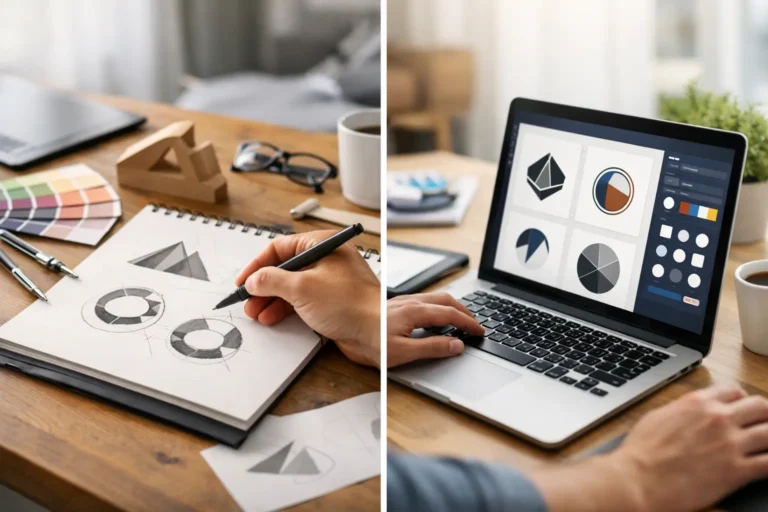
A logo maker is a tool. It usually asks for your business name, industry, preferred styles, colors, and icons, then generates logo options from templates or prebuilt design systems. It is fast, inexpensive, and easy to access.
A custom logo is a service. A real designer develops concepts around your business, audience, market position, and brand personality. Instead of selecting from a system, you are working through a process shaped around your company.
That difference affects more than aesthetics. It changes how original the design is, how well it fits your market, how flexible your files are, and how much guidance you get along the way.
If your brand is a serious part of your growth plan, custom design usually gives you more control and a better long-term result. If you just need a temporary placeholder to launch quickly, a logo maker may be enough for now.
When a logo maker makes sense
There is a reason logo makers are popular. They solve a real problem for business owners who need something quickly and cannot justify a larger investment yet.
If you are testing a side project, launching a short-term event, or creating a very early proof of concept, speed may matter more than originality. In those cases, a logo maker can help you get a visual identity in place without slowing down your launch.
It can also work for internal projects, community groups, or very small local efforts where brand differentiation is not a major competitive factor. If the logo only needs to function at a basic level, a template-driven approach may be enough.
The trade-off is that you are usually choosing convenience over strategy. You may get a decent-looking mark, but not one built to reflect your specific value, positioning, or audience expectations.
Where logo makers usually fall short
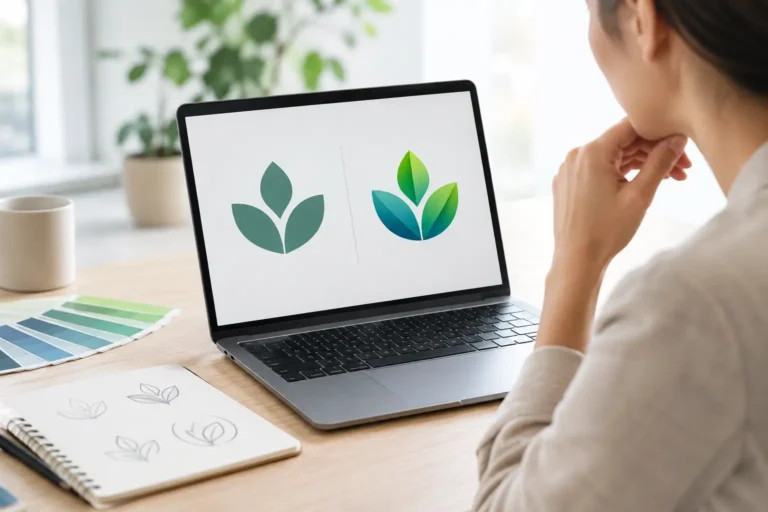
The biggest issue is sameness. Many logo makers rely on common icons, predictable layouts, and style trends that appear across hundreds or thousands of businesses. Your logo may look polished at first glance, but still feel interchangeable with others in your category.
That becomes a problem when your business needs to stand out. If you are in a crowded market like real estate, consulting, home services, beauty, legal, tech, or healthcare, generic branding can make you look less established than you actually are.
File limitations are another common issue. Some logo maker packages give you only basic file types or lower-quality exports. That can create trouble when you need signage, embroidery, print materials, large-format graphics, or a website header that scales cleanly.
Then there is the question of ownership. Not every platform handles licensing the same way. Some give broad usage rights, while others have terms that are more restrictive than business owners realize. If you are building a real brand asset, you want clarity on exactly what you own.
Why custom logo design carries more value
A custom logo is not valuable simply because a designer made it. It is valuable because it starts with your business, not a template library.
A strong custom process looks at who you serve, how you want to be perceived, what your competitors look like, and where your brand needs to appear. That leads to design decisions with a purpose – not just shapes and colors that happen to look nice on a screen.
Custom design also gives you room for nuance. A law firm and a financial startup may both want to look trustworthy, but they should not signal trust in exactly the same way. A family-owned contractor and a modern home services brand may both want to look dependable, but their visual language should still differ. Custom work accounts for those distinctions.
This is where many small businesses see the real return. The logo becomes more than a badge. It becomes a foundation for everything that follows, from your website and social graphics to sales materials and packaging.
Cost matters, but so does the cost of redoing it
A logo maker almost always wins on upfront price. If your budget is extremely tight, that matters. No serious business owner ignores cost.
But the lower initial price is only part of the picture. If the logo feels generic, does not scale well, or needs to be replaced once your business gains traction, you may end up paying twice. First for the quick fix, then again for the real brand work.
That is why the better question is not just, “What costs less today?” It is, “What will support the business I want to build over the next one to three years?”
If you are planning to market aggressively, invest in a website, print collateral, ads, social content, or packaging, the logo will sit at the center of all of it. In that case, getting it right earlier often saves time, reduces inconsistency, and prevents a disjointed brand rollout.
Custom logo vs logo maker for credibility
Most customers cannot explain design theory, but they react to branding quickly. They notice when a business looks established, clear, and trustworthy. They also notice when branding feels improvised.
That does not mean every logo maker result looks bad. Some look perfectly acceptable. The issue is whether acceptable is enough for the market you are entering.
If you are asking customers to trust you with larger purchases, long-term contracts, personal information, or high-value services, your visual presentation carries more weight. Professional branding can support that trust before you ever speak to a lead.
This is especially true for startups seeking investors, service businesses competing locally, and growing companies that want a more consistent presence across multiple touchpoints. In those situations, custom design does not just improve appearance. It strengthens perception.
Human guidance changes the outcome
One of the biggest differences between a logo maker and custom design is support. Software can generate options. It cannot ask the right follow-up questions, spot weak positioning, or help you translate your business goals into a stronger visual direction.
That human element matters when you are not sure what style fits your brand, when stakeholders disagree internally, or when you need someone to guide the process and keep it moving.
For many small business owners, this is the real value of working with a professional design partner. You are not left sorting through random options on your own. You get accountability, structure, revisions, and a clearer path to a final result you can actually use with confidence.
That is one reason businesses often choose a company like Logoworks – not simply for design output, but for the combination of custom work, transparent pricing, and real project support without agency-level complexity.
So which option is right for your business?
If your business is in a very early stage, your budget is minimal, and your logo is mainly a placeholder while you validate an idea, a logo maker can be a practical short-term solution. There is no need to overbuy before the business is ready.
If you are launching seriously, competing in a crowded market, refreshing an outdated identity, or building a brand you expect to grow, custom design is usually the smarter investment. It gives you stronger differentiation, clearer ownership, better usability across formats, and a brand foundation that can support sales and marketing.
The choice is not about whether one option is always good and the other is always bad. It is about fit. A logo maker is built for speed and simplicity. A custom logo is built for brand strength and long-term use.
Your business only gets one first impression with many customers. If your brand needs to look credible, consistent, and ready for growth, that is usually a sign to think beyond the fastest option.
A good logo should not just help you launch. It should help you look like you belong where you are headed.