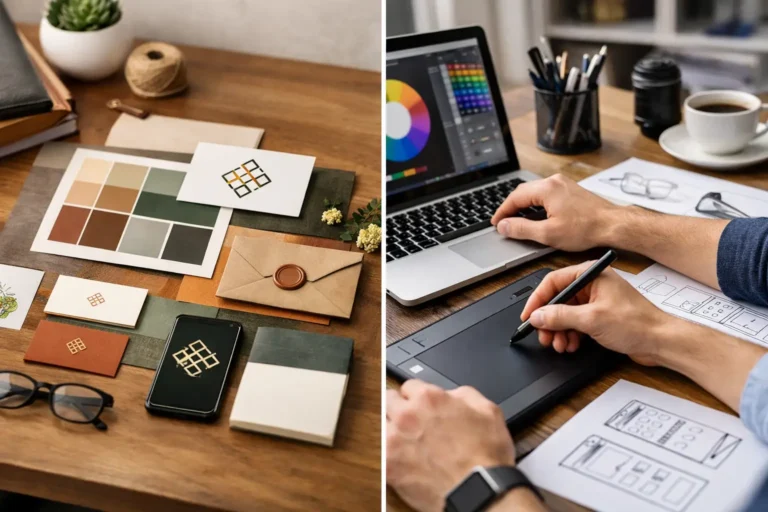

A new logo can feel like a simple purchase until the project starts expanding. You need a color palette for your website, social graphics for launch week, business cards for a sales meeting, and files your printer can actually use. That is where the branding package vs hourly design decision becomes more than a pricing question. It determines how clearly your project is scoped, how predictable your budget remains, and whether the finished work looks like one brand or a collection of separate tasks.
For many small businesses and startups, a package offers the most dependable path to a complete, professional presence. Hourly design still has a place, especially for narrowly defined work or ongoing support. The right choice depends on what you need now, what is already in place, and how much certainty matters to your business.
What You Are Really Buying
A branding package is a defined collection of brand assets delivered for a set price. Depending on the package, it may include a custom logo, alternate logo versions, color and typography guidance, business cards, stationery, social media graphics, and other foundational materials. The scope, timeline, revision process, and deliverables are established before work begins.
Hourly design bills for time spent. You may hire a designer to create a logo, make website updates, prepare a brochure, or handle creative requests as they come up. The flexibility can be useful, but the final cost depends on how long the work takes, how clear your direction is, and how many changes arise during the project.
Neither model is automatically better. The deciding factor is whether you are building a system or solving an isolated design need. Brand identity work is connected by nature. Your logo, typography, colors, and visual style should reinforce one another across every customer touchpoint. A package is built to address that connection from the start.
Branding Package vs Hourly Design: The Cost Difference
The most obvious distinction is pricing. With a branding package, you know the agreed cost before approving the project. That makes it easier to protect cash flow, plan a launch budget, and get internal approval without worrying that each revision or added asset will increase the invoice.
Hourly design can look less expensive at the beginning because you are paying only for the immediate request. If you need one small update and can provide clear direction, it may be the economical option. But branding projects rarely stay small. A logo request may lead to requests for a favicon, email signature, social profile image, presentation template, print-ready files, and a simple brand guide. Under an hourly arrangement, each item can require additional time, communication, and billing.
The risk is not that hourly designers are charging unfairly. Skilled design takes time, and experienced professionals should be paid for it. The issue is uncertainty. When you do not know how many hours exploration, revisions, file preparation, or coordination will require, comparing quotes becomes difficult. A low hourly rate can still lead to a higher total than a well-scoped package.
A package creates a different kind of value: it bundles the assets most businesses need together and ties them to a defined process. You are not just buying individual files. You are buying a coordinated foundation with fewer financial surprises.
Scope Is Where Projects Usually Drift
Most design frustration comes from unclear scope, not poor intentions. A founder may say, “We need a logo,” while picturing a full identity that can be used on a storefront, website, vehicle wrap, and LinkedIn page. A designer may reasonably interpret the request as one primary logo concept and final logo files. Both sides can be disappointed if expectations were never put in writing.
A well-structured branding package makes the included deliverables visible upfront. You can see whether you are receiving logo variations, brand colors, font recommendations, social assets, print collateral, and source or production-ready files. It also makes revision expectations clearer, so feedback can stay focused and productive.
Hourly work requires more active scope management from the client. That is manageable when you have an internal marketing lead who can write briefs, consolidate feedback, and prioritize requests. It becomes harder when the owner is also running operations, serving customers, and making decisions between meetings.
For first-time founders, defined packages remove a great deal of guesswork. You do not have to know every file type or asset you will need before starting. A thoughtful design partner helps organize the essentials around how you plan to sell, market, and grow.
The hidden cost of fragmented design
When design is purchased one piece at a time, consistency can slip quickly. Different designers may interpret your colors differently, use mismatched fonts, or recreate a logo without access to the original files. Even one designer can struggle to maintain consistency if the original brand decisions were never documented.
The result is a business that may look polished in one place and improvised in another. Customers may not consciously identify the problem, but they notice the difference between a brand that feels established and one that feels pieced together.
A package approach gives the designer a reason to consider the full picture. The business card should feel connected to the website header. The social template should use the same visual hierarchy as the brochure. Those details build recognition over time.
When Hourly Design Makes Sense
Hourly design is not the wrong choice for every business. It is often practical when the core identity already exists and the request is limited. If you have approved logo files, a usable brand guide, and a clear need for a single landing page update or a seasonal campaign graphic, paying for the time required can be sensible.
It can also work for ongoing needs that are difficult to predict. A growing company may need occasional sales sheets, event signage, presentation updates, or ad variations throughout the year. In that situation, an hourly arrangement can provide flexibility after the brand foundation is in place.
Choose hourly design when the work is genuinely contained, your requirements are specific, and you can manage the project closely. Ask for an estimated hour range, clarify what counts as a revision, and confirm whether production files, stock assets, copy changes, and meetings are included in the estimate. An hourly rate without those details is not a complete budget.
When a Branding Package Is the Stronger Investment
A package is usually the better fit if you are launching a business, rebranding, preparing to raise your visibility, or replacing inconsistent materials created over time. These are moments when a business needs more than one design deliverable. It needs decisions that work together.
Consider a package if any of these situations sound familiar:
- You are starting with no logo, no established colors, and no visual direction.
- Your current materials were created by different people and do not look connected.
- You need several launch-ready assets within a defined timeframe.
- You need a fixed budget before committing to the work.
- You want full ownership of final assets so your business can use them wherever it grows.
The last point deserves attention. Your brand identity is a business asset. Before starting any project, confirm what rights you receive, which final files are included, and whether you can use the work across print, digital, signage, and future campaigns. A clear agreement protects both the client and the creative team.
At Logoworks, package-based services are designed for businesses that want custom design with a clear process, dedicated support, transparent pricing, and ownership of their completed creative assets. That structure matters when you need to make progress without managing a rotating group of freelancers or navigating agency-level complexity.
Compare More Than the Price Tag
When evaluating a package against an hourly designer, compare the full working experience. Look at portfolio quality, industry relevance, communication standards, turnaround expectations, revision policies, and the actual files you will receive. Ask who will manage the project and how feedback will be handled. Fast design only helps if it is organized enough to get the right result.
Also consider the cost of delay. If your launch is waiting on a logo, or your team keeps recreating materials because there is no brand standard, the cheapest initial option may not be the most affordable business decision. Clear deliverables and a reliable timeline can have real operational value.
The best choice should leave you with more confidence, not more design decisions sitting on your desk. If your business needs a coordinated identity and a budget you can plan around, choose the structure that gives your brand a strong starting point and your team room to move forward.