
A startup can have a strong product, a smart pitch deck, and a capable team, then still lose trust in the first few seconds because its visual identity looks unfinished. A professional logo designer for startups helps close that credibility gap. The right designer does more than make a mark that looks good on a website. They create a logo system that reflects your business, works where customers actually see it, and gives your company a foundation to grow from.
For founders managing budgets, product decisions, and launch deadlines, logo design can seem like a small line item. It is not the only investment that matters, but it influences nearly every customer-facing touchpoint that follows: your website, sales materials, social profiles, packaging, proposals, signage, and email signature. Starting with a considered, usable logo prevents expensive inconsistency later.
What a Professional Logo Designer Brings to a Startup
A logo is not a piece of decoration added at the end of a launch. It is a visual shorthand for your company. Before a customer reads your homepage or hears your story, they may form an impression based on the clarity, relevance, and quality of your brand presentation.
A professional designer begins with questions, not software. Who is your customer? What problem do you solve? Who are you competing with? Do you need to appear established and reassuring, energetic and disruptive, premium and selective, or simple and accessible? The answers shape the design direction. A financial services startup and a children’s subscription brand may both need a memorable logo, but they should not communicate in the same visual language.
Professional work also accounts for practical use. A detailed illustration may look striking in a large presentation, then become unreadable as a social media profile image. A logo with a very thin typeface may look refined on screen but fail on embroidered apparel or printed labels. An experienced designer tests for these realities and develops an identity that holds together at different sizes and across different formats.
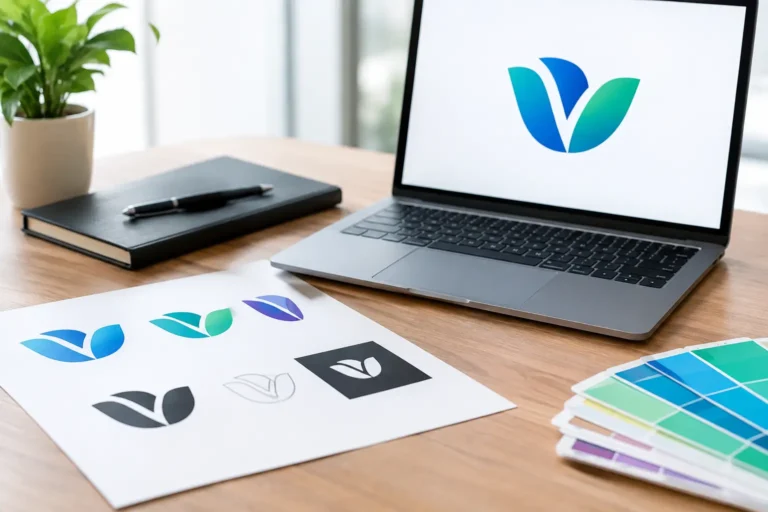
The best result is often not the most complicated one. It is a distinctive mark, clear typography, and an intentional color direction that your business can use consistently. That clarity is what makes a young company look prepared rather than improvised.
When Your Startup Is Ready to Hire a Designer
Many founders wait until they have every business detail finalized. In some cases, that is sensible. If your company name, positioning, or core offer is likely to change next month, pausing on a full identity package can save rework.
But waiting too long creates a different problem. Once a temporary logo appears in sales decks, investor materials, customer emails, and social posts, it starts to become the default. Teams make one-off decisions to fill gaps, and visual inconsistency spreads quickly. Replacing that patchwork later takes more time than building a clear foundation early.
You are usually ready to hire when your business name is confirmed, your audience is reasonably defined, and you can explain the value you provide in a few straightforward sentences. You do not need a 50-page brand strategy document. You do need enough direction for a designer to understand what the business should communicate.
For a pre-launch company, a logo can support a polished waitlist page, investor outreach, and early marketing. For a business already operating, it can help bring scattered materials into one recognizable system. The right timing depends on your stage, but the need for thoughtful design begins as soon as customers need a reason to take you seriously.
How to Choose a Professional Logo Designer for Startups
Price matters, especially when every startup dollar has a job. Still, the cheapest option is not always the most cost-effective. A logo that needs to be replaced after six months, lacks usable file formats, or creates trademark concerns can cost more than a well-managed project from the start.
Look beyond a portfolio’s most eye-catching images. Review whether the designer’s work shows range across industries while still feeling intentional. If every logo uses the same style, font treatment, or visual trend, your business may end up looking like a variation of someone else’s brand.
A reliable process matters just as much as visual talent. You should understand who will manage the project, how feedback is collected, how many concepts or revisions are included, and when you can expect each stage. Clear package pricing and defined timelines reduce uncertainty, particularly for founders working toward a launch date.
Ask what you will receive at the end. A finished logo should not be limited to one flattened image file. At a minimum, you will typically need scalable vector files for print, web-ready files for digital use, color and black-and-white versions, and guidance on basic logo usage. Full copyright ownership of approved final artwork should also be clear. Your designs should belong to your company, not remain tied to a platform, designer, or restrictive licensing arrangement.
Human support is valuable when you are not a design expert. A dedicated project manager can translate business goals into actionable creative feedback, keep the schedule moving, and make sure small details do not get lost. That kind of accountability is often the difference between a smooth project and an endless round of vague revisions.
Give Your Designer Better Inputs for Better Results
Designers can solve visual problems, but they cannot accurately guess your strategy. A focused brief helps them spend their energy on the right creative decisions.
Start by describing your customer in plain language. Avoid broad labels such as “everyone” or “businesses of all sizes.” Explain who is most likely to buy, what they care about, and what makes them hesitate. If you are building software for independent restaurant owners, for example, the brand may need to feel practical, responsive, and easy to adopt. If you are launching a high-end wellness service, the desired impression may be more calm, elevated, and personal.
Share your company story, but keep it useful. Explain your offer, mission, differentiator, and near-term goals. Include the places the logo will appear first, such as a landing page, mobile app, product packaging, uniforms, or storefront signage. Usage changes design choices.
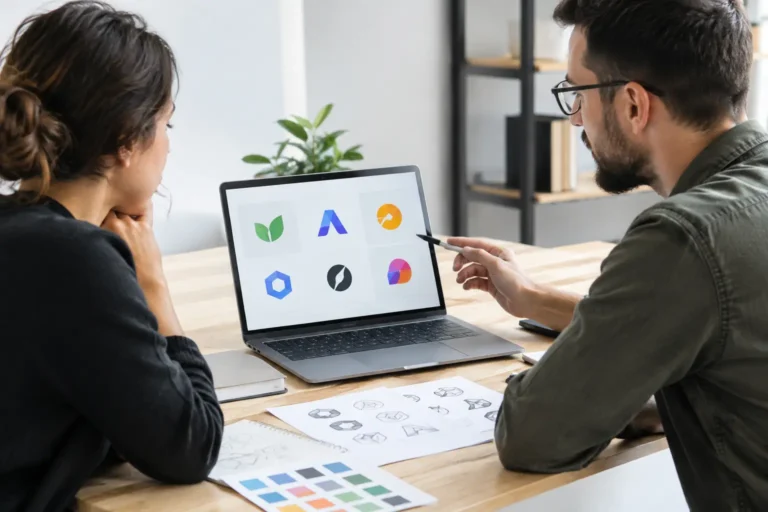
Visual preferences can help, too, provided they are framed as direction rather than a demand to copy. Show examples of brands you admire and explain why: perhaps the typography feels confident, the color palette feels warm, or the logo works well in a small space. Also identify what you do not want. The goal is not to recreate another company’s identity. It is to give your designer a more accurate view of your taste and market.
Know the Difference Between Feedback and Personal Preference
Founders should have a voice in their brand, but logo projects become difficult when every decision is treated as a matter of personal taste. Comments such as “I just don’t like it” are honest, but they do not tell a designer what problem to solve.
More useful feedback connects the work to a business goal. You might say the type feels too playful for enterprise buyers, the icon becomes unclear at a small size, or the color choice is too similar to a major competitor. This gives the designer a reasoned direction without prescribing every visual detail.
It also helps to limit the number of decision-makers. A startup may have co-founders, advisors, investors, and team members with opinions. Gathering input is reasonable, but giving everyone equal approval power can pull the design in conflicting directions. Select one or two people who understand the brand strategy and can consolidate feedback before it reaches the designer.
Avoid the Common Logo Shortcuts
Cheap templates, automated generators, and design contests can appear attractive because they promise speed. They can be appropriate for a temporary internal project or a business still testing an idea. They are less suitable when you need a distinct, ownable identity that will represent your company in the market.
The trade-off is usually originality and support. Template-based designs can resemble thousands of other businesses. Automated tools do not ask the questions that reveal your positioning. Contest models often encourage designers to produce speculative work quickly, which can lead to inconsistent quality and limited collaboration.
A custom process gives you more control over the outcome, though it requires participation from your team. You will need to provide direction, review concepts thoughtfully, and make decisions. That investment is worthwhile when the result needs to support real business growth rather than simply fill an empty spot on a website.
Build Beyond the Logo
Your logo is the starting point, not the complete brand. Once it is approved, the next priority is applying it consistently. A basic identity system should establish approved colors, typography, spacing, and examples of how the logo should and should not be used. This prevents your website, social media, sales collateral, and presentation decks from drifting in different directions.
For startups preparing to launch, it can be efficient to pair logo design with practical essentials such as a website or landing page, business cards, social media graphics, and branded stationery. Logoworks helps businesses bring these foundational pieces together without the complexity of managing multiple creative vendors.
The goal is not to look like a company much larger than you are. It is to look like a company that knows who it serves, takes its work seriously, and is ready for the next conversation. Choose a design partner who listens closely, explains the process clearly, and gives your startup brand assets you can use with confidence from day one.