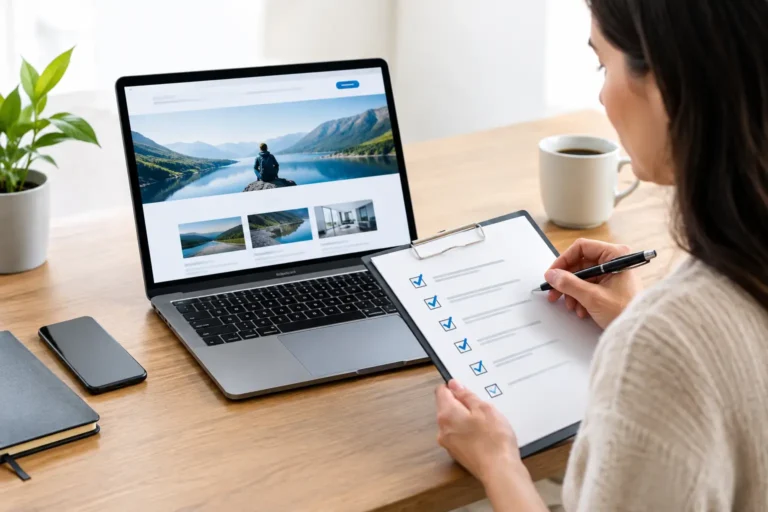

A new website can make a strong business look established – or make a great business look unfinished. That difference is rarely about adding more pages or chasing every new feature. It comes down to whether your site clearly communicates who you are, what you offer, and why a customer should trust you. This WordPress website launch guide focuses on the decisions and checks that help small businesses go live with confidence.
Start With the Brand Before the Build
WordPress gives you flexibility, but flexibility without direction can create an inconsistent site. Before selecting a theme, choosing colors, or writing a headline, get clear on the brand experience you want visitors to have.
A potential customer should recognize your business within seconds. Your logo, colors, fonts, photography style, and voice should feel like parts of one system. If the logo feels premium but the website uses generic graphics, mismatched colors, and casual copy, visitors may question the quality of the service behind it.
Start with the practical basics: your approved logo files, primary and secondary colors, font choices, image style, and a short statement of your positioning. For example, a local accounting firm may want to communicate clarity and discretion, while a fitness studio may need more energy and motivation. Neither approach is better. The right choice depends on the customers you want to attract.
If your branding is still pieced together from old documents and DIY templates, address that before launch. A professional identity gives every page a clearer foundation. Logoworks helps businesses create the core visual assets that make a website feel credible from the first click.
Build Around Customer Actions, Not Just Pages
Most small business websites need fewer pages than owners expect, but each page needs a job. A visitor should never have to guess where to find your services, how to contact you, or what happens next.
For many businesses, the essential structure includes a homepage, service or product pages, an about page, contact page, and a privacy policy. Add location pages, a portfolio, case studies, booking pages, or an online store only when they support a real customer need. A large menu can look comprehensive, but it can also slow decisions.
Your homepage should answer three questions quickly: What do you do? Who do you help? What should I do next? Put the clearest version of that message near the top of the page. Avoid vague headlines such as “Solutions for a Better Tomorrow.” A roofing company, for example, earns more trust by saying it provides residential roof repair and replacement in a specific service area.
Every important page should have one primary call to action. That might be “Request a Quote,” “Schedule a Consultation,” “Call Now,” or “Shop the Collection.” You can offer a secondary option for visitors who are not ready to commit, but do not make every button compete for attention.
Write for Scanners First
Visitors do not read websites like brochures. They scan headings, buttons, images, and the first lines of each paragraph before deciding whether to stay. Use descriptive headings, short paragraphs, and plain language that matches how customers describe their problem.
Lead with benefits, then support them with details. “Custom kitchen cabinets designed for your space” is more useful than “We are committed to excellence.” Specific claims, service areas, turnaround expectations, credentials, and testimonials can all reduce hesitation when they are accurate and easy to verify.
Choose WordPress Tools With Restraint
WordPress can support almost any kind of small business site, but too many plugins can create problems. Each plugin adds another piece of software to update, test, and potentially troubleshoot. The goal is not to have the longest feature list. The goal is a site that loads reliably, stays secure, and is simple for your team to manage.
Choose a reputable, responsive theme that works with your preferred editor and supports your brand layout without heavy customization. A page builder may be useful if you need flexibility and do not have a developer on staff. On the other hand, a simpler block-based setup can be easier to maintain and may perform better. The right choice depends on how often you expect to update the site and who will handle those updates.
Keep plugins focused on genuine business needs, such as security, backups, search optimization, contact forms, spam prevention, image compression, and analytics. If you sell online or accept appointments, use tools built for those functions rather than forcing a basic contact form to do more than it should.
Before launch, remove plugins, themes, images, and draft pages you are not using. They can clutter the backend, confuse future editors, and sometimes introduce security risks.
Use This WordPress Website Launch Guide as a Final Check
A website is not ready because the design looks good on a desktop screen. Launch readiness means the customer journey works from discovery through contact or purchase. Set aside time to test the site as a visitor would, ideally on more than one device and browser.
Check these launch essentials before making the site public:
- Confirm every navigation item, button, phone number, email address, form, and social media icon works correctly.
- Review the site on a phone, tablet, and desktop. Text should be readable, buttons should be easy to tap, and no page should require sideways scrolling.
- Test forms from start to finish. Confirm the business receives the submission, the customer sees a clear confirmation, and any automated response uses the right branding and wording.
- Add unique page titles and meta descriptions, then check that search engines are allowed to index the pages you want found.
- Set up HTTPS, strong administrator passwords, regular backups, and a plan for WordPress, theme, and plugin updates.
- Compress oversized images and test page speed. High-resolution files may look sharp, but slow load times can cost you impatient mobile visitors.
- Add required legal pages and confirm cookie, privacy, accessibility, or industry-specific requirements with the appropriate professional when needed.
Do not treat this as a one-person proofreading task. Ask someone who has not worked on the project to try to book, buy, call, or find a key service. Fresh eyes often catch confusing labels and missing details that the project team no longer notices.
Pay Attention to Trust Signals
Small businesses compete for trust before they compete on price. Your website should make it easy for a visitor to see that real people stand behind the company. Include your business name, service area, reliable contact information, and professional imagery. If you have reviews, certifications, affiliations, warranties, or years of experience, present them clearly without overloading the page.
Be careful with stock photography. It can be useful when it supports the message, but generic images of unrelated offices or people can weaken credibility. Whenever possible, use real project photos, team photos, product imagery, or custom graphics that reflect your actual business.
Plan for the First 30 Days After Launch
Going live is the start of website ownership, not the end of the project. During the first month, watch how visitors use the site and respond to what you learn.
Monitor form submissions, calls, booking requests, and sales. Check your analytics for pages with unusually high exits or low engagement. If visitors reach a service page but do not take action, the problem may be unclear pricing, weak proof, a hidden call to action, or simply a mismatch between the page and the search terms bringing people there.
Keep a simple update process. Decide who approves edits, who posts new content, and who handles technical maintenance. This prevents the common pattern of a polished launch followed by two years of outdated offers, expired promotions, and broken links.
A thoughtful WordPress launch does not require a massive agency process or a complicated technology stack. It requires a clear brand, customer-focused content, disciplined tools, and careful testing. Give customers a site that feels as dependable as the business they are considering, and every visit has a better chance of becoming a real conversation.