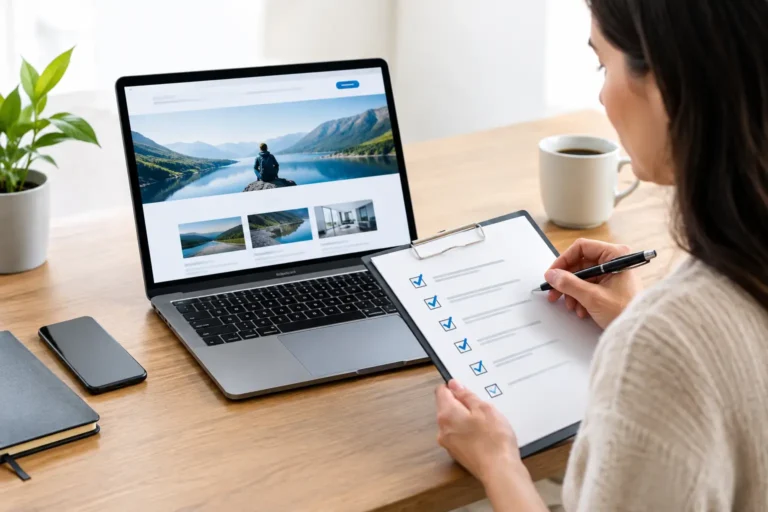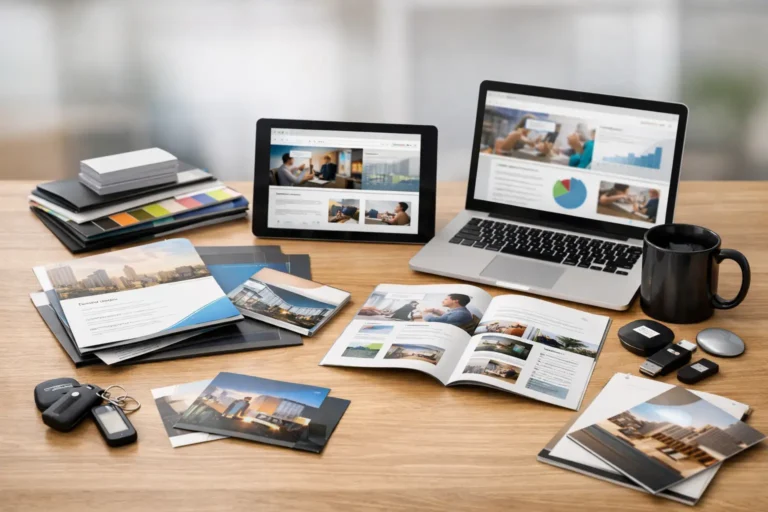

A potential customer has likely formed an opinion about your business before they ever speak with you. They see a logo on a social profile, a business card at an event, a landing page, or a flyer in a local shop. That is why marketing materials for new businesses are not simply items to check off after launch. They are proof that your company is real, prepared, and ready to serve.
The challenge is knowing what to create first. New businesses rarely need every possible brochure, sign, ad, and promotional item on day one. They need a focused set of professional assets that make the next customer interaction easier, whether that interaction happens online, in person, or through a referral.
Start With a Brand Foundation, Not a Random Collection of Assets
A polished brochure cannot fix an unclear brand. Before investing in individual materials, establish the visual rules that connect them: your logo, color palette, typography, image style, and basic voice. These elements turn separate pieces into a recognizable business presence.
Consistency matters because it reduces hesitation. When a prospect sees the same business name, colors, and visual quality on your website, proposal, social media profile, and printed materials, the experience feels organized. When every touchpoint looks unrelated, customers may wonder whether the business is established enough to trust.
Your brand foundation should also be practical. A complex logo with tiny details may look impressive on a large screen but become unreadable on a business card or social media icon. A good identity includes usable variations, such as horizontal and stacked logo formats, plus files designed for print and digital use. Make sure you receive full ownership of the final artwork and the file types you will need as your business grows.
8 Marketing Materials for New Businesses to Prioritize
The right order depends on how you sell. A home services company will have different priorities than a software startup, and a local retailer needs different materials than a consultant who works through referrals. Still, these eight assets cover the moments where most young businesses need to make a credible first impression.
1. A Professional Logo and Brand Identity
Your logo is not your entire brand, but it is the visual asset that appears almost everywhere. It should identify your business quickly, work at small sizes, and feel appropriate for your audience and price point. Pair it with defined colors, fonts, and usage guidelines so future materials do not drift off-brand.
Avoid relying solely on a low-resolution image pulled from an email or a DIY file created for one platform. You will eventually need your logo on invoices, signage, apparel, packaging, presentations, and more. Starting with properly prepared source files prevents expensive cleanup later.
2. A Website or Focused Landing Page
For many prospects, your website is the first sales conversation. It should explain what you offer, who you help, why customers choose you, and what action to take next. That does not always mean you need a large website at launch. A well-designed landing page can be the better choice when you have one primary service, a defined campaign, or a short timeline.
The trade-off is depth. A landing page is fast and focused, while a full website gives you room for multiple services, customer proof, portfolio work, and search visibility. Choose the format that fits your immediate sales process, then build from there.
3. Business Cards That People Keep
Business cards remain useful because referrals and in-person introductions still matter. They are especially valuable for local businesses, professional services, real estate teams, event vendors, and founders who network regularly.
Keep the card easy to scan. Your name, business name, role, phone number, email address, website, and a clear visual identity are usually enough. Trying to fit a complete services list on both sides often makes the card harder to use. A clean card signals confidence and gives people a simple way to reconnect.
4. Social Media Profile and Post Templates
Social media moves quickly, but your visual identity should not change with every post. Branded profile images, cover graphics, and flexible post templates help your business look intentional without requiring a new design process each time you publish.
Templates work best when they support a real content plan. A restaurant may need layouts for specials, events, and customer photos. A consultant may need formats for tips, client results, and speaking announcements. Build a small system around the content you will actually share rather than ordering dozens of templates that never get used.
5. A One-Page Sales Sheet or Service Overview
When someone asks, “What exactly do you do?” a one-page sales sheet gives them a clear answer they can save or forward. It can introduce your services, explain key benefits, highlight differentiators, and include a direct call to action.
This asset is particularly useful for businesses with a consultative sale. It gives prospects something more substantial than a business card, while remaining shorter and less costly than a multi-page brochure. It also helps keep your team, partners, and referral sources aligned on how the business should be presented.
6. Proposal, Estimate, and Invoice Templates
Not all marketing happens before the sale. A branded proposal or estimate can reinforce a prospect’s confidence at the exact moment they are comparing options. Clear scope, pricing, timelines, and next steps show that your business has a dependable process.
Use the same logo, colors, type, and tone found in your customer-facing marketing. Then carry that consistency into invoices and client onboarding documents. These materials may feel operational, but they shape the customer experience and can influence whether a client recommends you.
7. Email Signature and Presentation Templates
Small details create repetition. An email signature with your logo, role, contact information, and a consistent format makes every sent message more professional. A presentation template does the same for discovery calls, pitches, workshops, and internal meetings.
These are high-value assets because they are used repeatedly. They also protect against a common early-stage problem: each person on the team improvising their own version of the brand. A few simple templates keep communication polished as new employees, sales partners, or contractors come aboard.
8. Print Materials for the Way You Actually Reach Customers
This category is intentionally broad because the best print material depends on your business model. A contractor may need door hangers and yard signs. A retail store may need window graphics, product inserts, and promotional postcards. A B2B startup might get more value from a trade show handout or a leave-behind brochure.
Do not order a large print run just because a material sounds traditional. Start with the channels that put you in front of qualified customers. Test the message, track response where possible, and reorder once you know the material supports real conversations or sales.
Make Each Piece Work Harder
The strongest marketing systems reuse a clear message across formats without copying and pasting blindly. Your website might explain a service in detail, while a sales sheet gives the short version and a social post highlights one benefit. The core promise stays consistent, but the format respects how people consume information.
Before approving a design, ask three practical questions: Is this easy to understand in a few seconds? Does it look and sound like the rest of our business? Does it tell the customer what to do next? If the answer is no, adding more decorative elements will not solve the problem.
It also helps to think in terms of customer moments. A prospect who finds you through search needs a clear web experience. Someone who meets you at an event needs a memorable card and easy follow-up. A buyer reviewing a proposal needs confidence that your business can deliver. Mapping materials to these moments keeps your budget focused on outcomes rather than extras.
When to Bring in Professional Design Help
DIY tools can be useful for simple updates, quick internal documents, and early testing. But they have limits when your business needs a distinctive identity, print-ready files, a website that converts, or materials that must work across multiple channels. The cost of inconsistent design is not always obvious, but it appears in lost trust, slow revisions, and materials you have to replace too soon.
A guided design process gives you more than attractive files. It gives you strategic consistency, an accountable point of contact, and assets built for real business use. Logoworks helps small businesses create custom brand identities, websites, and collateral without the cost and complexity of a traditional agency.
Your first set of materials does not need to be exhaustive. It needs to make your next customer interaction more credible, more clear, and easier to act on. Start where your customers are already looking, build with consistency, and let each new asset earn its place in your growth plan.