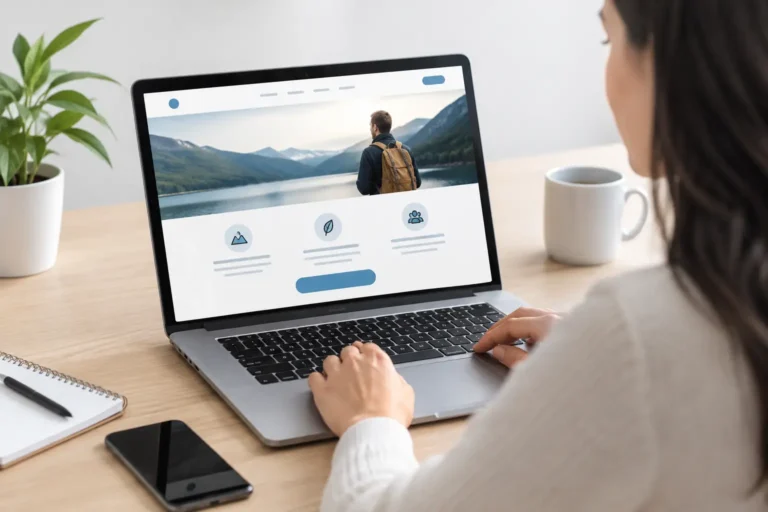

A potential customer may decide whether your business feels credible before they read a single sentence. They see your logo in a search result, your social profile, a proposal, or a business card. Brand design determines whether those moments feel connected, professional, and worth a closer look.
For small businesses, that first impression carries real weight. A polished identity can help a new company look established. An inconsistent one can make even great products or services feel uncertain. The goal is not to make every piece of marketing look fancy. It is to create a clear visual presence that gives customers confidence in choosing you.
Brand Design Is More Than a Logo
A logo is an essential part of a brand, but it cannot do all the work alone. Brand design is the visual system that makes your business recognizable across every customer touchpoint. It includes the choices that shape how your company looks, feels, and communicates before someone has a conversation with your team.
That system usually includes your logo, color palette, typography, image direction, icon style, and layout rules. It also influences practical materials such as your website, social media graphics, sales presentations, business cards, brochures, and email signatures.
Think about a local home services company. A strong logo may get attention on a truck or yard sign, but customers also need to recognize that same company on a quote, website, invoice, and social post. If each item uses different colors, fonts, and visual styles, the business can appear disorganized. When the system stays consistent, the company feels more dependable.
Consistency does not mean every piece looks identical. It means every piece clearly belongs to the same business.
Why Brand Design Matters for Growing Businesses
Professional design is often treated as a finishing touch after the “real” business work is done. In practice, it supports the work that brings in customers, helps close sales, and makes growth easier to manage.
First, it builds credibility. People make fast judgments, especially when comparing several providers. A well-designed identity signals care, competence, and stability. This is especially valuable for startups and service businesses that do not yet have years of reviews or a household name.
Second, it creates recognition. A customer may not be ready to buy after one visit, but repeated exposure to consistent colors, type, and messaging makes your business easier to remember. Recognition matters when they are ready to request a quote, book an appointment, or recommend a provider.
Third, it improves execution. Without a defined visual direction, each new flyer, social post, or presentation becomes a fresh design debate. With brand standards in place, your team and outside partners can produce materials faster while keeping the quality level steady.
The return is not always immediate or easy to measure in a single campaign. Brand design works alongside your service quality, pricing, customer experience, and marketing strategy. But when those elements are strong, a credible visual identity gives them a better chance to be seen and trusted.
What a Practical Brand Design System Includes
A brand identity should fit the size and stage of your company. A new business may not need a 100-page brand book. It does need enough structure to show up professionally wherever customers encounter it.
A useful foundation commonly includes these four areas:
- A versatile logo package: Your logo should work in full color, one color, horizontal, stacked, and small-format uses. A mark that looks good only on a website header will cause problems on social profiles, promotional products, and printed materials.
- Color and typography standards: A defined set of primary and supporting colors, plus approved fonts, prevents the visual drift that happens when everyone makes their own choices.
- Core marketing assets: Business cards, letterhead, presentation templates, social media graphics, and digital ad formats help your team put the new identity to work right away.
- Clear usage guidance: Simple rules for logo spacing, minimum sizes, color combinations, and image style help protect the investment as your business grows.
The right package depends on how customers find and evaluate you. A consultant who sells through referrals may prioritize a polished proposal template and LinkedIn graphics. A retail brand may need packaging, signage, social content, and ecommerce visuals. A B2B software company may focus first on its website, sales deck, and product-related graphics.
The key is to build for real use, not just for a presentation file that sits unopened after launch.
Start With Strategy, Not Color Swatches
The strongest visual identities begin with a few clear business decisions. Before choosing colors or reviewing logo concepts, define what the brand needs to communicate and who needs to trust it.
Ask practical questions. Who is your ideal customer? What problem do you solve better than alternatives? What should someone feel when they encounter your business: reassured, energized, cared for, premium, efficient, or approachable? Which competitors are customers already comparing you against?
A financial planner and a children’s activity center can both use bright colors, but the reasons and execution should be very different. The planner may use color sparingly to convey clarity and confidence. The activity center can use a more playful palette and expressive shapes without losing organization. Neither approach is automatically better. It depends on the audience and the promise your business makes.
Good design partners turn this input into purposeful creative direction. They do not simply ask which color you like best. Personal preference has a place, but your identity must work for the people you want to reach.
Avoid Designing for Everyone
Trying to appeal to every possible customer often produces a generic result. A restaurant that wants to feel upscale, casual, youthful, traditional, luxurious, and budget-friendly all at once will struggle to look distinct.
Choose the few qualities that matter most. A clear point of view makes design decisions easier and helps customers understand what to expect. You can expand later, but your foundation should be focused.
Common Brand Design Mistakes That Cost Momentum
The most expensive design mistake is not necessarily choosing the wrong shade of blue. It is creating an identity that cannot be used consistently in the places your business needs to show up.
One common issue is relying on a logo file that is too limited. A low-resolution image may appear fine in a small online profile, then become blurry on a banner or brochure. Your final files should support print and digital applications, including scalable vector formats when appropriate.
Another issue is treating revisions as an afterthought. Design feedback works best when it is tied to the original business goals. Instead of saying, “Make it pop,” explain what is not working: the type feels too formal for our audience, the icon is difficult to recognize at small sizes, or the color does not stand out from key competitors. Specific feedback leads to better choices and fewer wasted rounds.
Businesses also run into trouble when they buy assets without clear ownership. If you invest in custom creative work, confirm that final deliverables and usage rights are clearly defined. You should be able to use your brand across the channels needed to run and market your business.
Finally, avoid launching a new identity without updating the most visible materials. If your website shows one logo, your social accounts show another, and your proposals use old colors, customers receive mixed signals. Start with the touchpoints that get the most traffic or directly influence sales, then update the rest in a planned order.
How to Choose the Right Design Partner
Small businesses often weigh three options: doing it themselves, hiring an independent designer, or working with a design service or agency. There is no universal answer. Your budget, timeline, internal capacity, and project scope all matter.
DIY tools can be useful for early experiments or simple short-term needs, but they can make differentiation difficult. Freelancers can offer excellent work, although the experience varies widely based on availability, process, and the designer’s specialization. Traditional agencies may provide deep strategic support, but their pricing and timelines can exceed what an early-stage or growing business needs.
For many businesses, a structured design service offers a practical middle ground. Look for a partner that provides transparent pricing, a clear project process, experienced designers, and a dedicated point of contact. You should know what is included, when you will see concepts, how revisions work, and what files you will receive at the end.
Human guidance matters here. The right project manager can translate business goals into a focused brief, keep feedback organized, and help the work move forward without turning the process into another full-time job for the business owner.
Put Your New Identity to Work
A finished logo is the beginning, not the finish line. Once your core brand assets are ready, use them where they can improve trust and visibility most quickly. For many companies, that means the website homepage, Google Business Profile, social channels, sales materials, email signatures, and customer-facing documents.
Keep a simple folder of approved files, fonts, color codes, and templates so the right assets are easy to find. This small operational step prevents old logos and improvised graphics from returning months later.
Your business will evolve, and your brand can evolve with it. The best foundation is not one that locks you into a trend. It is one that gives you a recognizable, professional starting point for the next customer conversation. When you are ready for that foundation, a guided team such as Logoworks can help turn your business goals into design you can use with confidence.