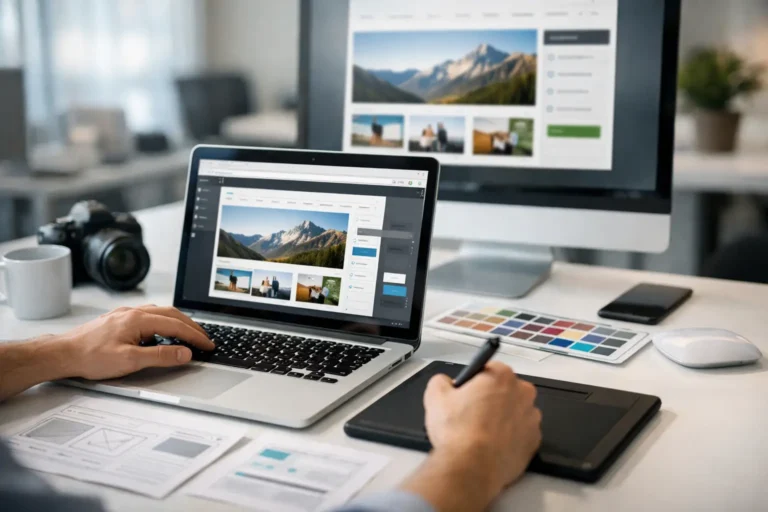

Most startup websites do not fail because the founder had a bad idea. They fail because the site asks visitors to do too much work. If someone lands on your homepage and cannot tell what you do, why it matters, and what to do next within a few seconds, you are already losing ground. That is why website design for startups is not just about aesthetics. It is about credibility, clarity, and momentum.
Early-stage companies rarely have unlimited time or budget. Every page has to earn its place. A startup website should help you look established before you are widely known, explain your offer before a sales call, and make it easier for the right customers to say yes. Good design supports all of that. Poor design gets in the way.
What website design for startups needs to do first
Startup founders often feel pressure to launch with everything at once – multiple service pages, a blog, investor information, a detailed product tour, case studies, hiring pages, and more. In practice, most new businesses need a focused site that answers a small number of high-value questions.
Who are you? What problem do you solve? Who is it for? Why should someone trust you? What should they do next?
If your website handles those five questions clearly, you are ahead of many competitors. If it buries them under vague headlines, stock visuals, or cluttered navigation, the site may look polished while still underperforming.
This is where startups need discipline. Design is not decoration layered on top of a business. It is part of how the business communicates. The homepage headline, page structure, calls to action, typography, spacing, and brand consistency all shape whether a visitor feels confident enough to keep going.
Credibility matters more than complexity
Established brands can get away with a little ambiguity because people already know them. Startups cannot. If your business is new, your website has to do more trust-building than a mature company’s site does.
That trust usually comes from a few simple signals working together. Professional branding helps you look legitimate. Clear copy shows you understand the customer’s problem. A clean layout makes the business feel organized. Consistent colors, fonts, and visual elements create the impression that your company is intentional, not improvised.
There is a trade-off here. Founders sometimes chase flashy design trends because they want to stand out. But if the result is hard to navigate, slow to load, or confusing on mobile, the design is working against the business. Distinctive is good. Distracting is expensive.
For most startups, a strong visual identity paired with straightforward user experience will outperform a site built around novelty alone. Visitors should remember your brand, not struggle to decode it.
Start with messaging, not mockups
One of the most common mistakes in website design for startups is jumping into layout decisions before the core message is settled. A good designer can improve clarity, but design cannot rescue a weak value proposition.
Before you think about page sections, think about positioning. What do you want to be known for? What makes your offer different from alternatives, including doing nothing? What kind of customer are you best suited to serve?
Once that is clear, the design process becomes much more effective. You can build pages around real priorities instead of filling space. The homepage can lead with a specific promise. Service pages can focus on benefits and outcomes instead of generic descriptions. Calls to action can reflect actual buying intent.
This is also why startups benefit from working with a design partner that understands branding, not just web layouts. If your logo, colors, messaging, and website all feel disconnected, the customer experience feels fragmented. A startup trying to earn trust cannot afford that kind of inconsistency.
The pages most startups actually need
A startup site does not need to be large to be effective. In many cases, a streamlined website performs better because it reduces friction and keeps the visitor focused.
At minimum, most startups should have a homepage, an about page, a service or product page, and a contact page or conversion-focused landing page. Depending on your sales process, you may also need a pricing page, FAQ section, or a simple portfolio or proof page.
The real question is not how many pages you have. It is whether each page moves a potential customer closer to action. If a page exists only because you think a “real business” should have one, it may be adding noise rather than value.
For service-based startups, clarity around process can be especially helpful. People want to know what it is like to work with you, how long it takes, and what they receive. For product-based startups, the site should quickly explain the use case, the audience, and the next step, whether that is booking a demo, starting a trial, or making a purchase.
Design choices that affect conversion
Good startup design is practical. It creates a smoother path from interest to inquiry.
Your homepage should have one primary goal. If you ask visitors to book a call, read five case studies, join a newsletter, browse your Instagram, and download a guide all at once, most will do none of it. Prioritization matters.
Navigation should be simple enough that a first-time visitor can understand it immediately. Mobile design should never be treated as a secondary version, because for many startups it is the primary experience. Button labels should be specific. Headings should say something meaningful. Images should support the message, not fill empty space.
Speed matters too. A visually impressive site that loads slowly can hurt trust and conversions. The same goes for inconsistency. If the homepage looks premium but the contact form feels outdated, the experience starts to break apart.
Small details influence perception more than many founders expect. Tight spacing, readable type, consistent alignment, and thoughtful hierarchy do not just make a site look better. They make the business appear more capable.
Why brand consistency gives startups an advantage
For a startup, branding is often treated like something to refine later. That can be a costly delay. Your website is usually where prospects form their first serious impression of your business. If the brand feels generic or inconsistent, the company can feel less trustworthy even if the offer is strong.
Strong branding creates recognition and confidence. It gives your website a point of view. It also makes future marketing easier because your landing pages, social graphics, email materials, sales collateral, and website all start from the same foundation.
That does not mean startups need bloated brand systems or endless revisions. It means they need a professional identity that is flexible, consistent, and built to support growth. This is where a structured design process helps. Instead of piecing together assets from different freelancers or low-cost marketplaces, startups often get better results from one accountable team that can align brand and web execution.
That is one reason many growing businesses look for a partner like Logoworks – not just to get a website live, but to create a more credible brand presence without the cost and complexity of a traditional agency.
The right website is the one you can grow with
Startups change quickly. Offers evolve, customer segments sharpen, and messaging gets better as the market responds. Your website should support that reality.
A good startup website is not frozen. It gives you a solid foundation now while leaving room to expand later. Maybe you begin with a simple lead-generation site and later add new service pages, testimonials, or landing pages for campaigns. Maybe your product messaging tightens after customer feedback and the homepage needs to shift. That is normal.
What matters is starting with a site that is strategic enough to convert today and flexible enough to keep up tomorrow. Overbuilding too early can waste budget. Underbuilding can hurt credibility. The right balance depends on your business model, sales cycle, and stage of growth.
If you are early, focus on clarity, trust, and action. If you are scaling, focus on consistency, performance, and stronger proof. In both cases, the goal is the same: make it easier for the right people to understand your value and take the next step.
A startup website does not need to be flashy to work hard for your business. It needs to be clear, credible, and built with intention. When the design reflects who you are, what you offer, and where you are headed, your website stops being a placeholder and starts becoming a real growth asset.