
If your logo looks polished but your website, social graphics, and print materials all feel like they came from different companies, you do not have a branding system – you have disconnected assets. That is exactly where a small business branding package earns its value. It gives you the core visual tools to show up consistently, look credible, and save time every time you need to market your business.
For many owners, branding gets pieced together under pressure. A logo is ordered first. Then business cards. Then a social profile image. Then a website header that kind of matches. The result is familiar: inconsistent colors, mismatched fonts, and materials that make a growing business look less established than it really is. A well-built package solves that problem at the root.
What is a small business branding package?
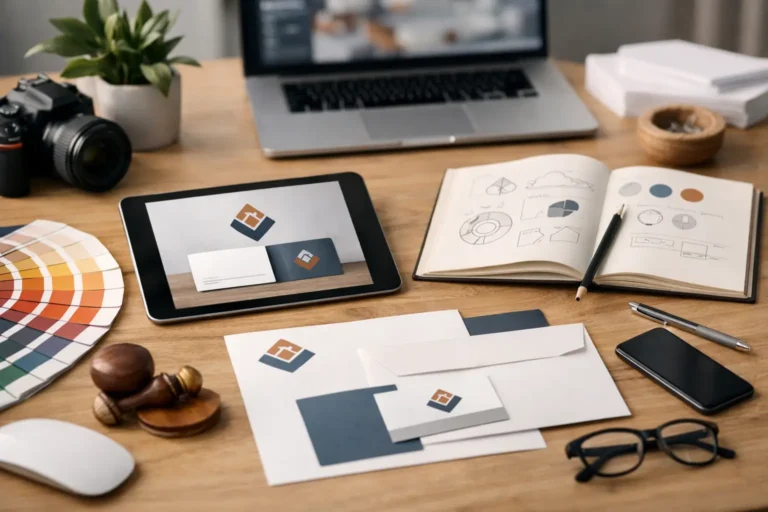
A small business branding package is a bundled set of brand identity assets designed to help your business present itself consistently across channels. At a minimum, it usually starts with logo design, brand colors, typography, and basic usage guidelines. Stronger packages often extend beyond the logo into the items a business actually needs to operate and market itself, such as business cards, stationery, social media graphics, and website visuals.
The key difference between buying a logo and investing in a package is usability. A logo by itself is a file. A package is a working system. It gives you the pieces needed to apply your brand in the real world without reinventing the look every time a new need comes up.
That matters whether you are launching a new company, rebranding an established one, or trying to clean up years of inconsistent design. Customers notice when a business looks organized. They also notice when it does not.
What should a small business branding package include?
The right package depends on your stage, industry, and sales model, but a few components carry the most practical value.
Logo files for every real use case
You need more than one version of a logo. A proper package should include primary and alternate logo variations, along with file types suited for print and digital use. Horizontal, stacked, icon-only, black, white, and full-color versions all serve a purpose. If a vendor only delivers one logo file, you will feel the limitation quickly.
Ownership matters too. Final deliverables should be yours to use across your website, signage, packaging, advertising, and future campaigns without confusion about rights.
Brand colors and typography
These are not decorative details. They are what make your business recognizable from one touchpoint to the next. A branding package should define your primary and secondary colors, plus the font system used across branded materials.
This creates consistency for everything from Instagram posts to sales sheets. It also helps future designers, printers, or internal team members create materials that still look like your brand instead of their personal interpretation of it.
Basic brand guidelines
Even a short style guide can prevent expensive inconsistency. This does not need to be a hundred-page manual for most small businesses. What it should do is show how to use the logo, which colors and fonts belong to the brand, and what not to do.
That simple reference can save hours of back-and-forth later. It is especially useful if multiple people touch your marketing over time.
Business essentials
For service businesses and local companies, branded stationery still matters. Business cards, letterhead, email signature graphics, and invoice or proposal templates help your business look established during actual customer interactions.
Not every company needs every item. A consultant may need a polished proposal template more than a brochure. A retail business may prioritize packaging and signage. A smart package reflects those priorities instead of stuffing in generic extras.
Digital marketing assets
This is where many packages are either genuinely helpful or disappointingly outdated. If your business markets online, you need branded digital assets that support daily visibility. Social profile graphics, post templates, ad creatives, website banners, and landing page visuals often provide more day-to-day value than print collateral.
For many modern businesses, the strongest branding package is one that bridges identity and execution. It should not stop at defining the brand. It should help you use it.
Why packaged branding makes sense for small businesses
Hiring separate freelancers for logo design, brand colors, social graphics, and print materials can work, but it often creates inconsistency and project drag. One designer interprets the logo one way. Another builds social assets around different fonts. A third creates your brochure with slightly off-brand colors. You spend more time managing than growing.
A package brings the work under one process. That leads to cleaner consistency, faster turnaround, and clearer pricing. For owners who do not have an internal creative team, that structure is a major advantage.
Cost is another factor. A full-service agency can produce excellent work, but often at a price point that is hard to justify early on. On the other end, low-cost marketplaces can produce quick files that look acceptable at first glance but fall apart when you need revisions, support, or a complete brand system. The middle ground matters: custom design, guided by real people, at a predictable cost.
How to evaluate a branding package before you buy
Not all packages with the same name deliver the same value. A lower price can still be expensive if you end up redoing the work in six months.
Look at the process, not just the deliverables
A strong design outcome usually comes from a strong process. Ask how discovery works, how feedback is handled, how many concepts or revision rounds are included, and who manages the project. Clear communication is not a bonus. It is part of the product.
If the process feels vague, rushed, or overly automated, the results often do too.
Check whether the package fits your actual business needs
A startup preparing to launch needs different assets than a ten-year-old company refreshing its image. If you rely heavily on referrals, printed materials may matter more. If your growth depends on digital acquisition, web and social assets should be prioritized.
The best package is not the one with the longest feature list. It is the one that covers the tools you will use right away and supports where your business is headed next.
Confirm ownership and file access
This should be non-negotiable. You should receive the final files you need, in formats you can use, with full rights to your approved designs. Anything less creates friction later.
Consider support and accountability
Small business owners rarely want to chase five different contractors to fix one brand problem. Having a dedicated point of contact and a vetted design team makes the experience easier and lowers risk. That is one reason businesses choose structured providers like Logoworks instead of rolling the dice on anonymous marketplaces.
How much should a small business branding package cost?
There is no single number because scope changes everything. A basic package focused on logo design and core brand standards will cost far less than a broader package that includes website visuals, stationery, and marketing collateral.
What matters more than the headline price is value per usable asset. If you pay less but receive limited files, weak design thinking, and no support, your actual cost is higher because the brand still is not ready for market. If you pay for a package that gives you a complete, cohesive identity and the materials to put it to work immediately, the return is easier to justify.
For most small businesses, the goal is not to buy the cheapest design. It is to avoid paying twice.
When it is time to upgrade your branding package
Some businesses start lean and expand later, which is completely reasonable. If your company already has a logo but struggles with consistency, that is often the signal to upgrade from a single asset to a fuller package.
Other signs are harder to miss. Your team keeps recreating graphics from scratch. Your website does not match your sales materials. New hires use different fonts and colors. Customers say your business is great in person but your brand looks dated online. Those are not cosmetic issues. They affect trust.
A good branding package gives your business a clearer identity, but just as important, it reduces decision fatigue. Instead of guessing how things should look, you have a system that supports faster, more confident marketing.
The right package should make your business feel more established the moment you start using it – not because it adds fluff, but because it gives you the structure to show up consistently wherever customers find you next.