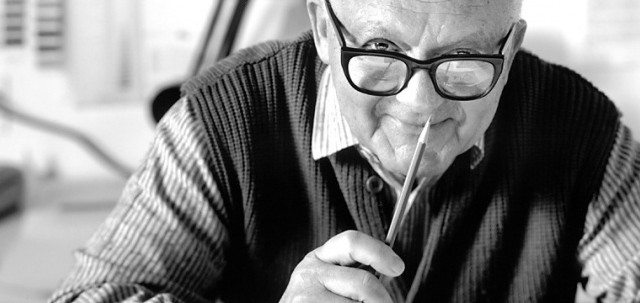

The graphic designer Paul Rand (1914-1996) was a seminal and pioneering figure in the history of logo design and corporate branding. One of the originators of the Swiss Style of graphic design—also known as the International Typographic Style, which prioritizes clarity, precision, and simplicity—Rand created the logos for IBM, UPS, and ABC. Born in Brooklyn, Rand was educated at the Pratt Institute, the Parsons School of Design, and the Art Students League. For several years he taught design at Yale University, and was inducted into the New York Art Directors Club Hall of Fame in 1972. Rand’s ideas and principles continue to inspire and influence graphic designers today. So let’s examine four key features of the Rand credo.
Simplicity. First and foremost, Rand maintained that good design is clear and comprehensible. “The principal role of the logo is to identify,” he wrote in Design Form and Chaos, “and simplicity is its means….Its effectiveness depends on distinctiveness, visibility, adaptability, memorability, universality, and timelessness.”
Humor. A feel for comedy is at the heart of Rand’s work. “I always steered towards humorous things,” he said. “People who don’t have a sense of humor really have serious problems.” When discussing his UPS logo design, Rand further distills the role of humor in his process. “I do not use humor consciously, I just go that way naturally. A well known example is my identity for United Parcels Service: to take an escutcheon—a medieval symbol which inevitably seems pompous today— and then stick a package on top of it, that is funny.”
Structure. Here’s where Rand’s sense of humor and simplicity merge. Rand had a complex, almost paradoxical notion of structure, viewing it as necessary but also something to be subverted—or at the very least subjected to play. Take, for example, his rebellious stance on using grids to contain and construct design. “I don’t sit down and start with grids—although I do grids all the time. Sometimes maybe I don’t use them, or maybe I don’t use them properly, but who cares?” Rand prioritized the creative output, not the rigid, prescribed process to get him there.
Discovery. Rand relentlessly and excitedly pursued new forms and symbols in his creations all the time. “Innovation is the enemy of trendiness, pretense, and timidity,” he wrote in Design Form and Chaos. “It recognizes the genuine from the spurious. It tantalizes the viewer, stimulates the mind, intensifies meaning, generates interest, and is at the heart of both better design and better business.” Clearly, discovery and unbridled enthusiasm for pursuing new shapes, forms, and creations, are characteristics and sensibilities that Rand believed are essential for every designer.
For more of Rand’s design philosophy, “Paul Rand: A Designer’s Words” is available to download here.